.jpg)

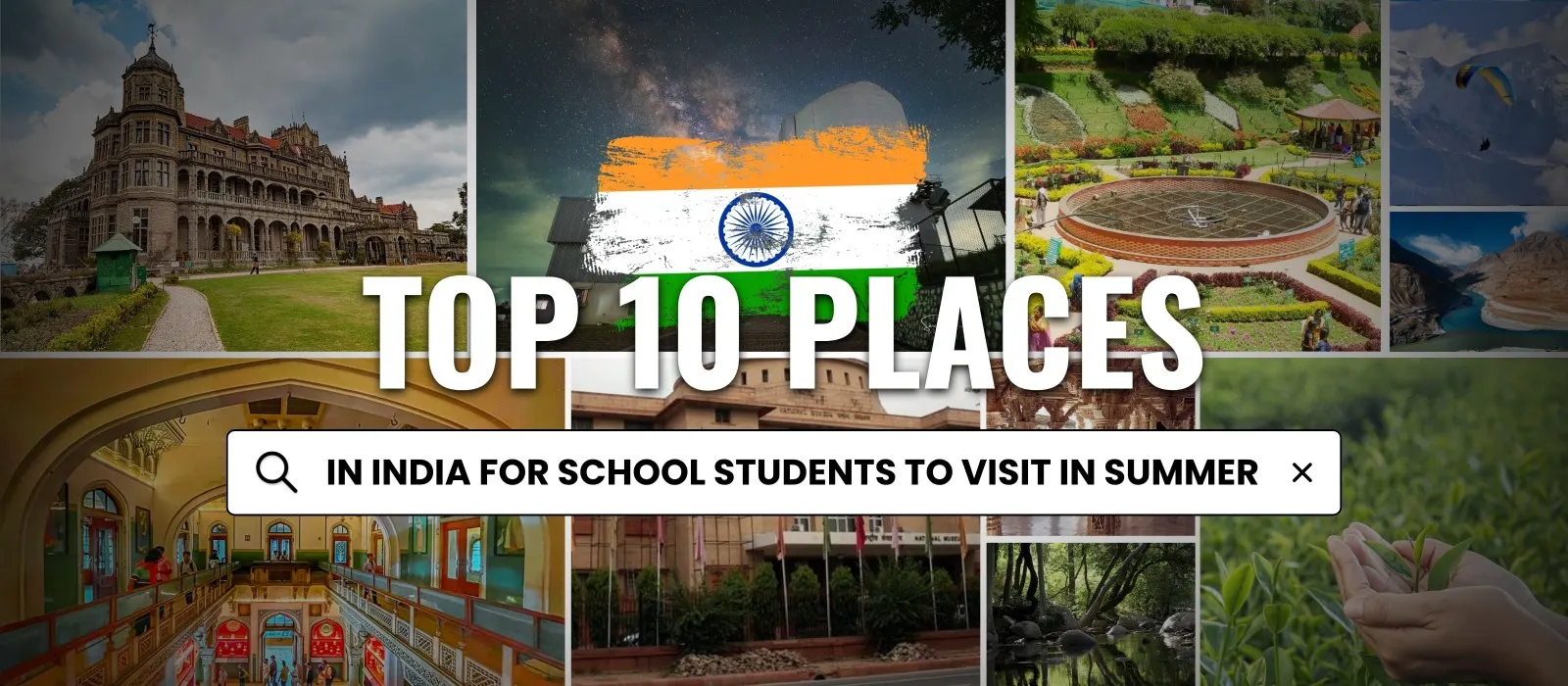
Introduction: Top 10 Places in India for School Students
Summer vacation is the one time of year when students actually get to step away from textbooks and experience the world directly. A well-planned school trip does more than just fill up two weeks — it builds confidence, sparks curiosity and gives students memories they carry for life. India, with its extraordinary range of geography, history and culture, offers some of the finest summer vacation places in India specifically suited for young learners and school groups.
From snow-dusted hill stations in the north to lush green valleys in the south, the options are genuinely wide. This guide covers the top 10 places to visit in India during summer vacation — each selected for its learning value, safety, accessibility and budget-friendliness for student groups.
Top Picks at a Glance
| Destination | Best For | Ideal Classes | Budget Level | Duration |
|---|---|---|---|---|
| Shimla | History + Engineering | 6–12 | Medium | 3–4 days |
| Manali | Adventure + Geography | 8–12 | Medium | 4–5 days |
| Nainital | Science + Astronomy | 5–12 | Low | 3–4 days |
| Jaipur | History + Culture | 4–12 | Low | 2–3 days |
| Delhi | Museums + Civics | 3–12 | Medium | 4–5 days |
| Ooty | Botany + Ecology | 5–12 | Medium | 3–4 days |
| Munnar | Eco Tourism | 6–12 | Medium | 3–4 days |
| Mount Abu | Art + Architecture | 5–12 | Low | 2–3 days |
| Darjeeling | Tea + Environment | 6–12 | Medium | 4–5 days |
| Leh-Ladakh | Advanced Geography | 10–12 | High | 6+ days |
Why Summer Trips Are Important for School Students
Classroom learning has its limits. No amount of reading about the Himalayas replicates what a student feels standing at the foothills. No geography chapter on river valleys matches what they observe firsthand beside a real one. Summer trips bridge that gap — and they do it in ways that stick.
Research in educational psychology consistently shows that experiential learning improves long-term retention. When students connect a lesson to a physical place or event, the memory is stored differently — and recalled more easily. Beyond academics, travel also develops soft skills: communication, adaptability, team coordination and basic problem-solving under real conditions.
For many students — especially from smaller towns — a school trip is the first time they travel beyond their district. That exposure alone changes perspective. It teaches them that the world is larger than their immediate surroundings and that there is a great deal worth exploring.
| ✓ Strengthens understanding of geography, history and science through direct observation | ✓ Develops independence and confidence in unfamiliar settings |
| ✓ Builds social skills through group travel and shared experiences | ✓ Offers equal exposure to students from different economic backgrounds |
| ✓ Creates lasting memories that reinforce academic concepts taught in class |
How to Choose the Best Summer Destination for Students
Picking a destination for a school group is not the same as planning a personal holiday. The decision has to factor in the age group, the curriculum focus, the total budget per student, the group size, and the physical demands of the location. Here is what to evaluate before shortlisting:
| ✓ Climate (May–June): Hill stations and high-altitude areas stay between 15–28°C, far more manageable than plains which cross 40°C. | ✓ Budget Compatibility: Group discounts at entry points, government guesthouses, student rail fares, and bundled school tour packages reduce total costs significantly. |
| ✓ Educational Value: Does the location have museums, heritage sites, science parks, nature reserves, or institutions tied to school subjects? | ✓ Group-Friendly Activities: Activities that work for 20–100 students together — guided nature walks, museum tours, heritage trails, science demonstrations. |
| ✓ Safety & Infrastructure: Reliable road or rail access, nearby hospitals, accommodation designed for student groups, and stable mobile connectivity. | ✓ Travel Time: Destinations reachable in 8 hours or less by train or road are more practical for 3–5 day school trips. |
Top 10 Places to Visit in India During Summer Vacation
1. Shimla – A Perfect Hill Station for Students
| ✓ Temperature: 15–25°C (ideal for summer) | ✓ Best For: History, Geography, Engineering |
| ✓ Travel Time: 7–8 hours from Delhi |
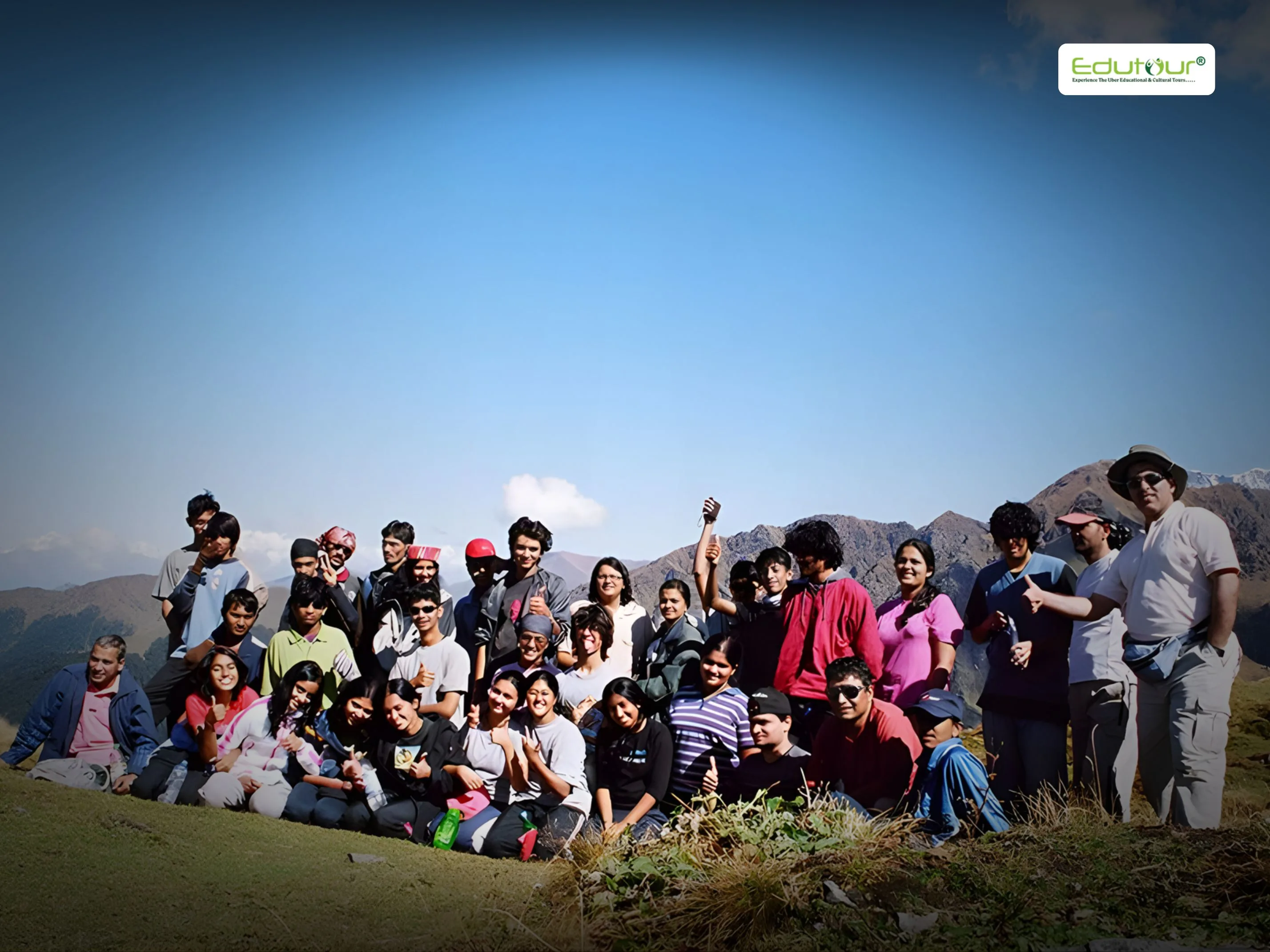
Hill stations in India for summer vacation do not get more practical than Shimla. At 2,200 metres above sea level, the temperature holds between 15–25°C through May and June — a genuine contrast to the plains. It is also the most accessible mountain destination from Delhi: roughly 7–8 hours by road.
The Kalka-Shimla toy train is itself an educational stop. This UNESCO-listed narrow-gauge railway, built in 1903 across 102 tunnels and 864 bridges, is a working demonstration of 19th-century engineering. For students studying science or history, it is a more compelling classroom than most.
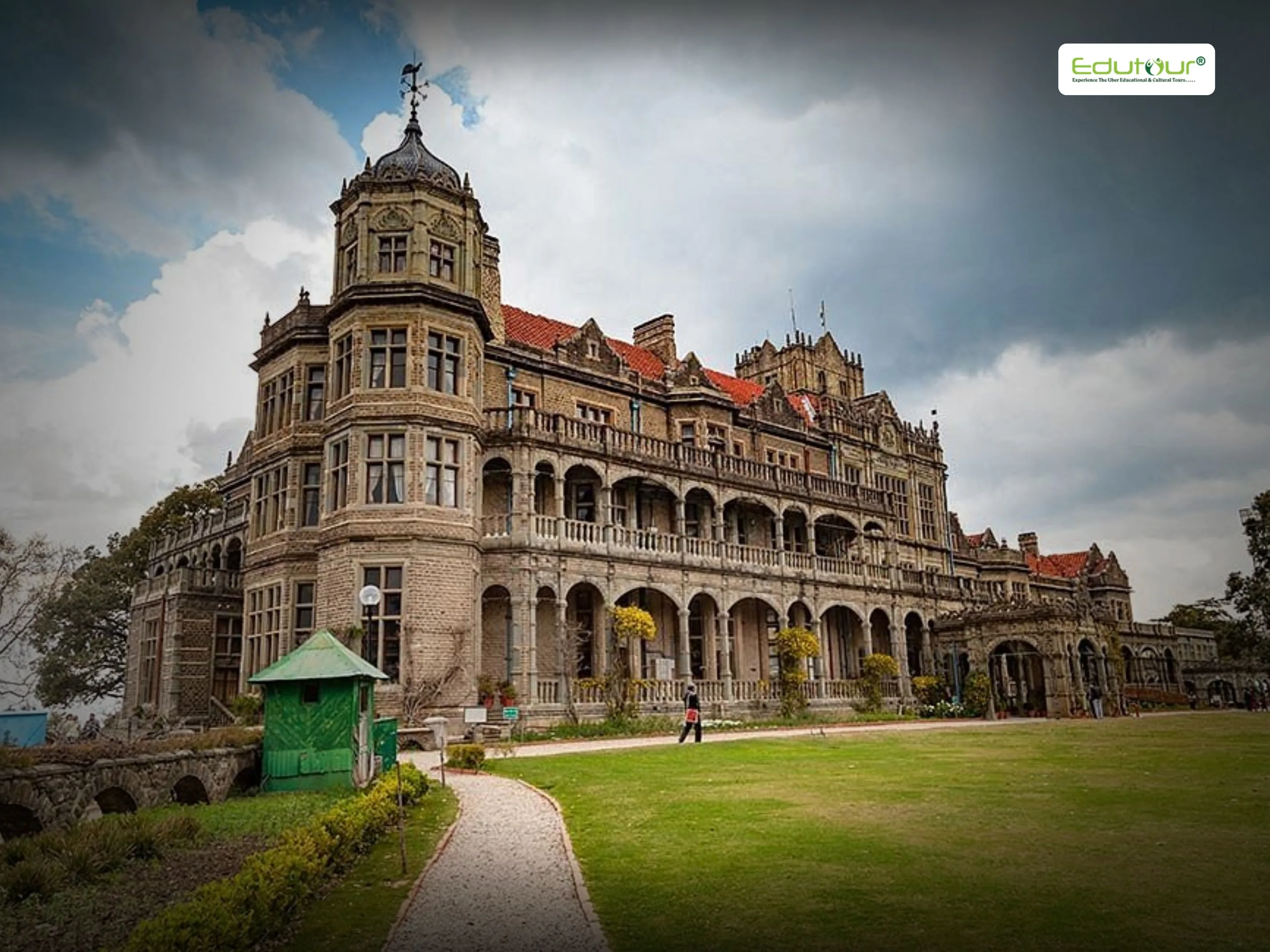
The Indian Institute of Advanced Study, housed in the former Viceregal Lodge, allows guided visits for school groups. The Himachal Pradesh State Museum covers the region's art, culture, and tribal traditions in organised sections well suited for structured school visits. Mall Road and Jakhu Hill round off a compact, walkable itinerary.
Best for: Classes 6–12 | History, Geography, Science | Group size: Any
2. Manali – Adventure & Learning Together
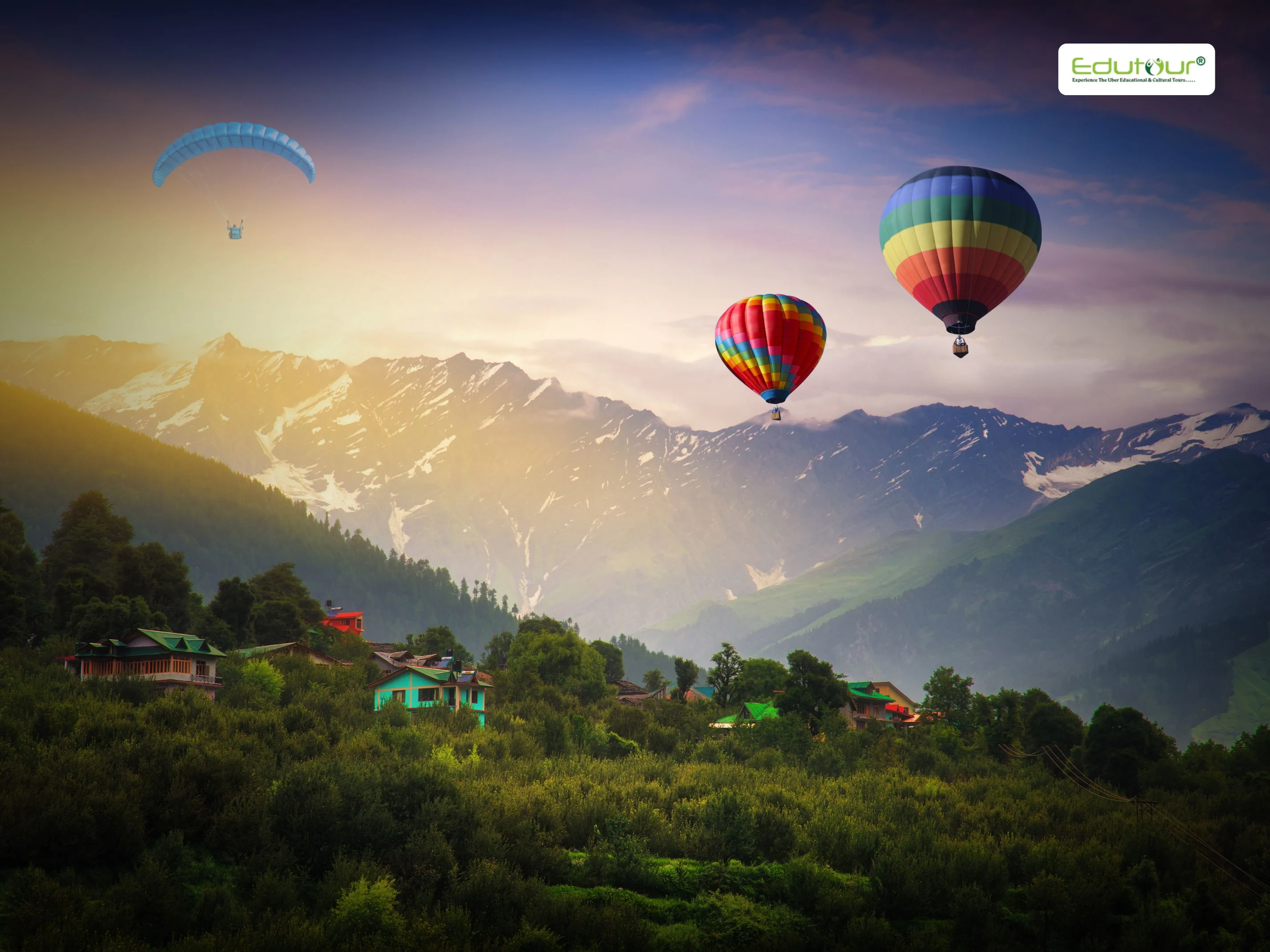
Manali at 2,050 metres offers one of the most balanced combinations of academic content and physical experience among all best summer destinations India has for school groups. The town is surrounded by alpine terrain, ancient temples, and high-altitude passes — and has enough tourism infrastructure to handle large student groups comfortably.
The Rohtang Pass and Atal Tunnel give students a real look at glacial geography, high-altitude flora, and mountain engineering. The Hadimba Devi Temple — a 16th-century wooden structure — is a strong introduction to Himalayan religious architecture and tribal culture. The Vashisht hot springs, with natural sulphur water, connect to basic geology.
Adventure activities — river crossing, nature walks, snow treks — are available in structured, supervised formats designed for school groups. Manali is one of the most student-friendly travel destinations India offers because the infrastructure for managing student travel already exists here at scale.
Best for: Classes 8–12 | Geography, Environment, History | Group size: Any
3. Nainital – Budget-Friendly Lake Destination
Nainital consistently ranks among the most budget summer vacation places for students in India — partly because of its proximity to Delhi (6–7 hours), partly because accommodation and food costs here are significantly lower than in more crowded Himalayan towns. The town is built around a glacial lake at 2,084 metres, and the geography of the lake itself is worth explaining to students before they arrive.
The Aryabhatta Research Institute of Observational Sciences (ARIES) and the Naini Peak Observatory are among Asia's significant astronomical research centres. School groups can visit with advance permission, and the experience — standing beside a professional telescope with a researcher explaining how it works — is one that stays with students for years.
Jim Corbett National Park is about two hours away and offers structured school safari experiences focused on conservation and wildlife biology. Nainital Zoo houses rare Himalayan species including snow leopards and red pandas — useful for any biology-focused curriculum visit.
Best for: Classes 5–12 | Science, Geography, Biology | Group size: Any

4. Darjeeling – Tea Gardens & Nature Learning
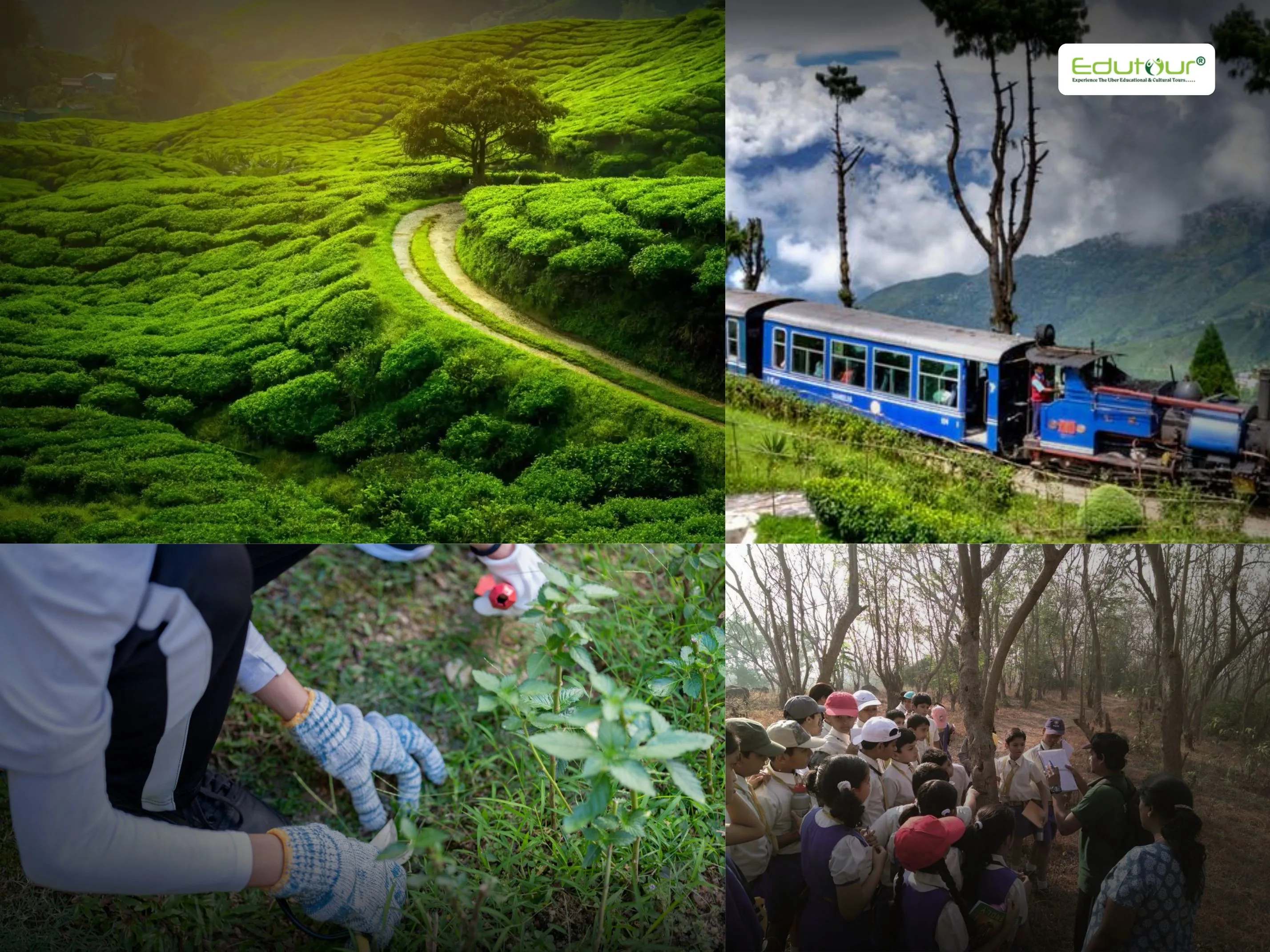
Darjeeling is not just a scenic hill station — it is a working classroom for economics, agriculture, ecology, and history, all in the same location. The tea gardens here produce one of the world's most recognised exports, and most estates offer structured school tours that explain the full cultivation-to-export process.
The Himalayan Mountaineering Institute (HMI), co-founded by Tenzing Norgay after the 1953 Everest summit, runs an excellent museum on mountaineering history and climate change at altitude. For students studying adventure, environment, or modern history, it is a genuinely engaging stop. The institute also runs awareness programmes specifically for school groups.
The Darjeeling Himalayan Railway — a UNESCO World Heritage Site since 1999 — adds a historical and engineering dimension to the trip. On a clear morning, the view of Kanchenjunga, the world's third-highest peak, from Tiger Hill is the kind of primary experience that no amount of textbook reading can substitute.
Best for: Classes 6–12 | History, Economics, Environment | Group size: Any
5. Ooty – Cool Climate & Botanical Learning
Ooty in the Nilgiris is among the best places in India for school trip in summer for students from southern states. At 2,240 metres, it stays between 15–25°C even in May — and it has a stronger concentration of botanical and ecological learning resources than almost any other Indian hill station.
The Government Botanical Garden, established in 1848 and spread across 22 hectares, is one of India's finest botanical collections. Students studying biology, botany, or environmental science will find it genuinely detailed — the garden is organised by plant family and includes a tree estimated to be over 20 million years old, a fossilised specimen on display.
Mudumalai Wildlife Sanctuary, about an hour from Ooty, offers school-group-friendly guided safaris focused on conservation. The Nilgiri Mountain Railway — a UNESCO site — runs between Ooty and Mettupalayam through dense forest, and the journey itself covers five distinct ecological zones. Rose Garden, Ooty Lake, and the tea factory tours complete a well-rounded itinerary.
Best for: Classes 5–12 | Botany, Ecology, Biology | Group size: Any
6. Munnar – Green Hills & Eco Tourism
Munnar in Kerala's Idukki district sits at 1,600 metres and stays consistently cool and green through summer. The landscape is unlike anything else in India — an almost unbroken carpet of tea and cardamom plantations across rolling hills, broken occasionally by shola forests and waterfalls.
The Tata Tea Museum is one of the most well-structured industrial visit options in South India. It covers the full history of tea cultivation in the region — from colonial origins to modern export chains — with artefacts, machinery displays, and guided explanations. Students studying economics, history, or geography get direct value from an hour here.
Eravikulam National Park is home to the endangered Nilgiri Tahr, with the largest surviving wild population living here. The park runs guided nature walks for school groups focused on ecosystem conservation. For a summer vacation trip for school students India, Munnar provides a rare combination of ecological depth and comfortable infrastructure in a single location.
Best for: Classes 6–12 | Ecology, Economics, Environmental Science | Group size: Any
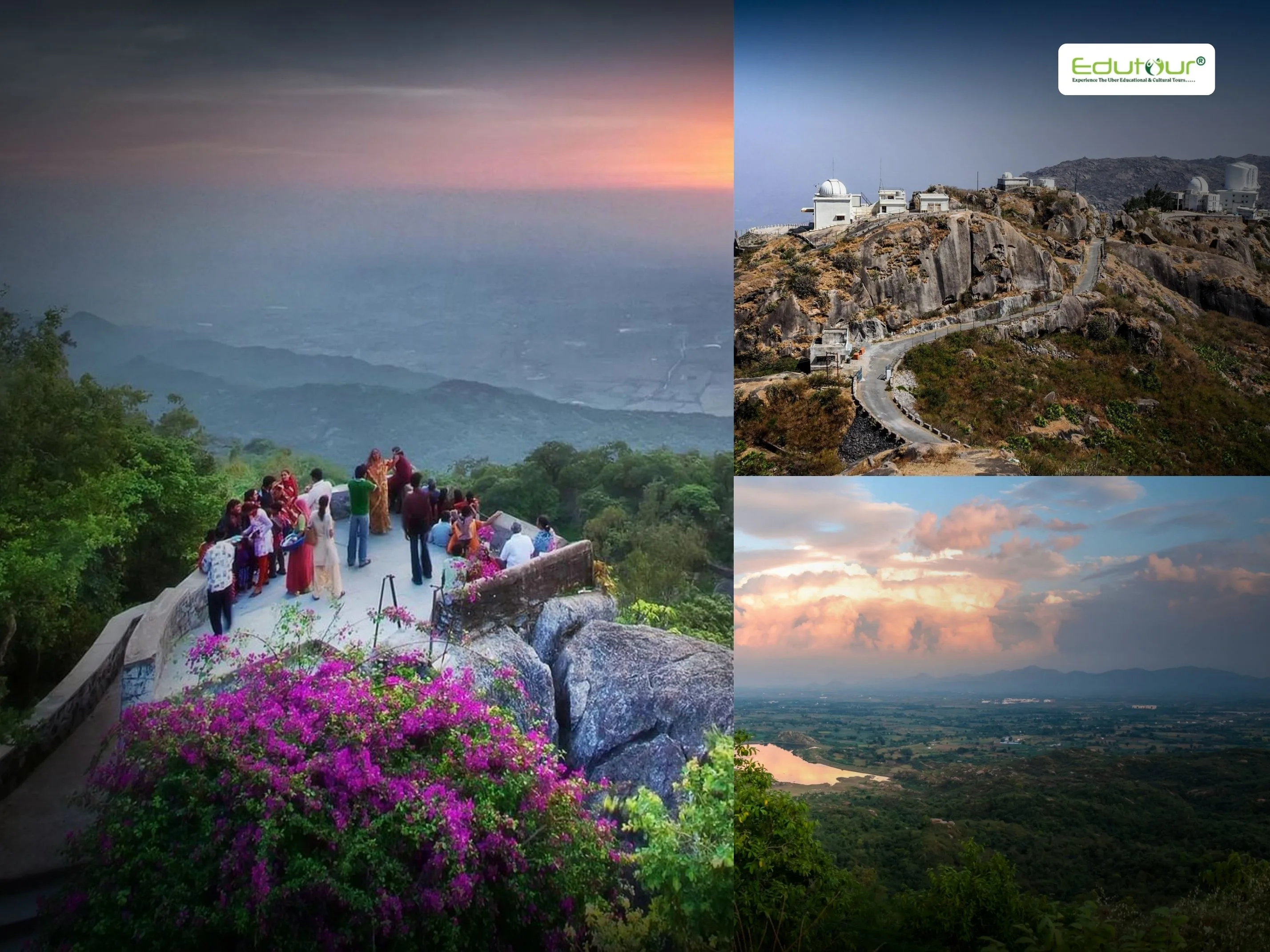
7. Mount Abu – Only Hill Station in Rajasthan
For schools in Rajasthan, Gujarat, and the surrounding states, Mount Abu is the most logistically practical best hill station for school trip in summer. It is Rajasthan's only hill station, sitting at 1,220 metres in the Aravalli range. Summer temperatures rarely cross 33°C, which is genuinely comfortable by Rajasthan standards.
The Dilwara Temples, a complex of five Jain temples built between the 11th and 13th centuries, are among the finest examples of marble craftsmanship in the world. Art and architecture students consistently rate them as among the most detailed sculptural environments they have visited. A guided tour with context about Jain philosophy and medieval stone-working is one of the better school-trip experiences available in western India.
Guru Shikhar, the highest peak in the Aravallis at 1,722 metres, offers a clear panoramic view of the range — useful for understanding the Aravalli geography. Nakki Lake and the Trevor's Tank Crocodile Sanctuary complete a structured two-day itinerary for school groups.
Best for: Classes 5–12 | Art, History, Geography | Group size: Any
8. Leh-Ladakh – Unique Geography Experience
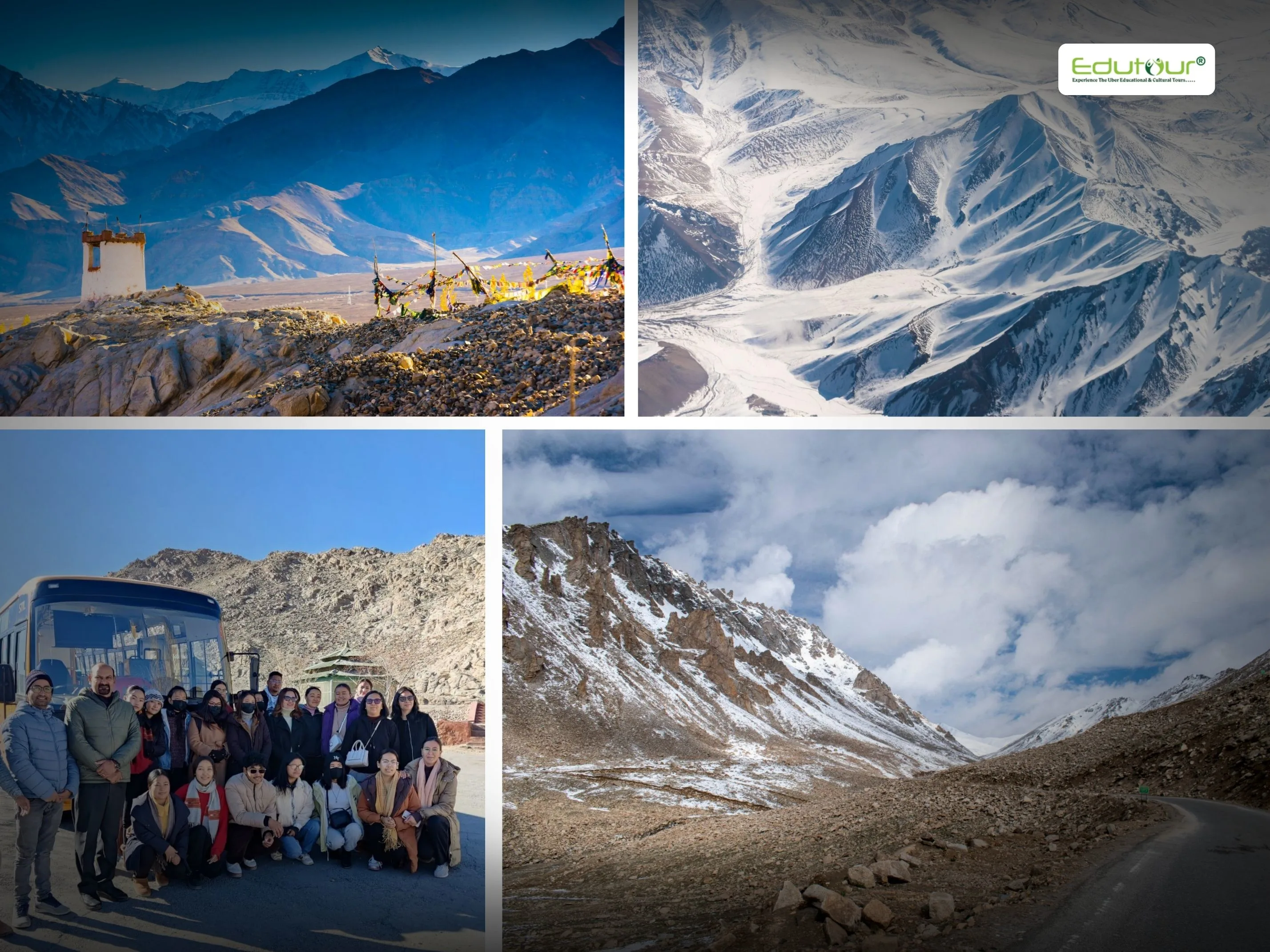
Leh-Ladakh is the most demanding destination on this list — and for the right student group, the most rewarding. The geography here has no equivalent in India: a cold-arid desert at 3,500 metres, surrounded by the Himalayas and Karakoram ranges, cut by glacial rivers, and dotted with 1,000-year-old Buddhist monasteries.
The Confluence at Nimmu, where the Indus meets the Zanskar River — carrying different colours of water — is a live geography lesson. Magnetic Hill, Pangong Tso, and Nubra Valley each demonstrate distinct geomorphological processes. The Hall of Fame museum in Leh covers the history of the Indian Army in Siachen and Ladakh, relevant for students studying modern history and current affairs.
For senior school students aged 15 and above, this trip is academically unmatched. It requires proper acclimatisation — 2 days minimum in Leh before travel to higher areas — and medical clearance for the group. Minimum trip duration: 6 days. Schools should work with educational tour packages for schools in India that have specific Ladakh experience.
Best for: Classes 10–12 | Geography, History, Ecology | Minimum: 6 days
9. Jaipur – Historical & Cultural Learning
Jaipur is the most content-rich single-city destination in North India for school groups. The Pink City holds more UNESCO-listed heritage, royal architecture, living craft traditions, and scientific heritage in a concentrated area than almost any other Indian city — and all of it connects directly to school curricula in history, social science, art, and science.
Jantar Mantar — an 18th-century astronomical observatory built by Maharaja Sawai Jai Singh II — is the finest of five such observatories he constructed across India and a UNESCO World Heritage Site. The instruments here still give accurate solar time. For students studying physics, astronomy, or history, it is one of the most compelling stops in the country.
Amber Fort, City Palace, Hawa Mahal, and the Albert Hall Museum form a structured heritage trail that can be covered in two full days. The Albert Hall is particularly useful for students studying Indian art, archaeology, and Egyptian artefacts — it holds a 2,500-year-old mummy. As a best places for school trips in India, Jaipur's infrastructure for student groups is highly developed, with affordable accommodation and licensed guides readily available.
Best for: Classes 4–12 | History, Art, Science, Civics | Group size: Any
10. Delhi – Museums & Educational Tours
Delhi may be hot in summer, but for sheer concentration of educational content accessible in a single trip, no Indian city comes close. The capital holds more institutions of learning, national museums, heritage monuments, and government buildings than any other city — and all of them are open to school groups, most at subsidised entry rates.
The National Museum (Indian history and art), National Science Centre (interactive science exhibits), National Rail Museum (operational exhibits with rides), Nehru Planetarium (astronomy shows), and National Zoological Park form a strong five-day educational circuit. The National Crafts Museum shows India's regional craft traditions in meticulous detail.
Red Fort, Humayun's Tomb (UNESCO), Qutub Minar (UNESCO), and India Gate give students a physical walk through 800 years of Indian history in two days. Parliament House visits can be arranged for civic education for older students. Organised school group tours from Delhi frequently combine the city with a Jaipur or Agra extension, creating a comprehensive educational tour package for schools in India covering history, science, and culture.
Best for: Classes 3–12 | History, Science, Civics, Art | Best: 4–5 days
Budget Tips for School Trips in India
Managing costs for a group of 30–100 students requires planning, but it is entirely achievable without cutting corners on safety or experience. Here are practical ways to keep places to visit in India under budget for students actually affordable:
| ✓ Book early: Hotels and transport booked 2–3 months in advance cost significantly less than last-minute arrangements | ✓ Avoid peak season for some spots: Some destinations like Manali and Ooty are cheaper in early May before peak tourist weeks in June |
| ✓ Use group discounts: Most museums, national parks and heritage sites in India offer discounted group rates for school students — always ask | ✓ Plan meals in advance: Fixed-menu group meals from local restaurants are far cheaper than per-plate ordering |
| ✓ Travel by train: For long distances, group train bookings in sleeper class are both economical and an experience in themselves | ✓ Work with a registered educational tour operator: A specialist handles bulk negotiations with hotels, transport providers and attractions — often saving more than their own fee |
| ✓ Choose government accommodation: YMCA, state tourism guesthouses and youth hostels often offer clean, affordable rooms built for group stays |

School Tour Packages & Planning Tips
Planning a school trip involves more than just picking a destination and booking buses. There are approvals to manage, parents to inform, itineraries to design and logistics to coordinate — all while keeping the educational purpose clear. Working with a dedicated provider of educational tour packages for schools in India removes most of this burden from teachers and administrators.
A good school educational tour operator India will handle accommodation, transport, guided visits, safety protocols and emergency coordination as a package — which is both more convenient and usually more cost-effective than organising each component separately.
What a Good School Tour Package Should Include
| ✓ Student-appropriate accommodation — clean, secure, group bathrooms, meals included | ✓ Written daily itinerary with clear educational objectives for each stop |
| ✓ AC transport with licensed commercial drivers and clean vehicles | ✓ Emergency contact protocol, first-aid support, and travel insurance |
| ✓ Licensed tour guides at each destination with curriculum-linked commentary | ✓ Transparent cost breakdown — per student, all-inclusive, no hidden charges |
| ✓ Pre-confirmed entry tickets for all sites with group discount applied | ✓ 24-hour helpline during the trip for teachers and parents |
When evaluating school group tour packages India, ask specifically about the operator's experience with student groups, their safety record and whether they carry proper group travel insurance. Affordable school tour packages India are widely available, but price should never be the only criterion — particularly when the group includes minors.
Safety Tips for School Trips
Safety is the one area where there is no room for compromise on a school trip. These are the baseline measures every school and tour coordinator should verify before departure:
| ✓ Conduct a headcount at every transition point — boarding, arriving, entering a new venue | ✓ Carry a basic first-aid kit and ensure at least one accompanying adult has first-aid training |
| ✓ Assign one teacher or group leader per 10–15 students, with clear roles defined in advance | ✓ Verify that all transport vehicles are roadworthy and that drivers hold commercial licences |
| ✓ Share an emergency contact list with all accompanying staff before departure | ✓ Ensure all students carry a printed card with school name, teacher contact number and destination hotel address |
| ✓ For hill station or high-altitude trips, carry basic medicines for altitude sickness, motion sickness and common colds | ✓ Check safe places for school trips in India advisories from the local tourism boards before finalising |
Conclusion
India is one of the few countries where a single summer trip can take students through ancient history, cutting-edge science, diverse ecology and living culture — all within the same week. The ten destinations listed here are not just scenic; they are genuinely useful for a school student's academic and personal development.
Whether the goal is a structured summer vacation trip for school students India, a first-time mountain experience or a deep dive into Indian heritage, the options are both wide and affordable. The key is matching the right destination to the right age group, curriculum focus and group size — and planning far enough in advance to secure the best arrangements.
Plan Your School Trip with EduTour
| ✓ Customized itineraries based on class & curriculum | ✓ Experienced guides for educational tours |
| ✓ Budget-friendly packages with no hidden charges | ✓ 24/7 support during the trip |
| ✓ Safe transport & verified accommodations |
📞 Call Now for Instant Booking Assistance
💬 WhatsApp Us for Quick Quotes
📩 Get a Free Customized School Tour Plan in 24 Hours
Frequently Asked Questions
Q1. Which is the best place for school trips in India during summer?
Shimla, Manali, and Nainital are among the best summer destinations for school students due to their cool weather, educational attractions, and strong infrastructure for group travel.
Q2. What are the most budget-friendly summer vacation places for students in India?
Nainital, Mount Abu, Ooty, and Jaipur offer the best value for school budgets. Group discounts, student rail fares, and government guesthouses significantly reduce total per-student costs without compromising safety or experience quality.
Q3. Are hill stations safe for school trips in summer?
Yes. Hill stations such as Shimla, Manali, Ooty, and Munnar have well-developed group-travel infrastructure, reliable medical facilities, and experienced hospitality staff accustomed to managing school groups. Standard safety protocols cover the remaining risks.
Q4. How do I find affordable school tour packages in India?
Contact a registered educational tour operator directly and request an all-inclusive group quote. Specialist operators negotiate bulk rates with hotels, transport companies, and attractions — their bundled packages are almost always cheaper than independent bookings for the same services.
Q5. Which educational trips are suitable for primary school students?
Jaipur, Delhi, Ooty, and Nainital work well for younger students aged 8–12. All four have age-appropriate attractions — museums, botanical gardens, zoos, and heritage trails — with manageable walking distances and reliable group infrastructure.
Q6. Is Leh-Ladakh suitable for school group tours?
Leh-Ladakh is best for senior students aged 15 and above. Groups need minimum two days of acclimatisation on arrival, medical screening before departure, and a trip duration of at least six days. It should not be planned for younger or physically unfit students.
Q7. What should a complete school tour package include?
A complete package should cover accommodation, AC transport with licensed drivers, certified guides, pre-confirmed entry tickets, a structured daily itinerary with educational objectives, first-aid support, 24-hour helpline, and full cost transparency — all confirmed in writing before payment.
Q8. How far in advance should schools book summer trip packages?
Book at least 2–3 months before departure. Early booking secures better accommodation and transport rates, gives time to collect permissions and medical clearances, and allows students to prepare for what they will see and learn at each destination.
