.jpg)

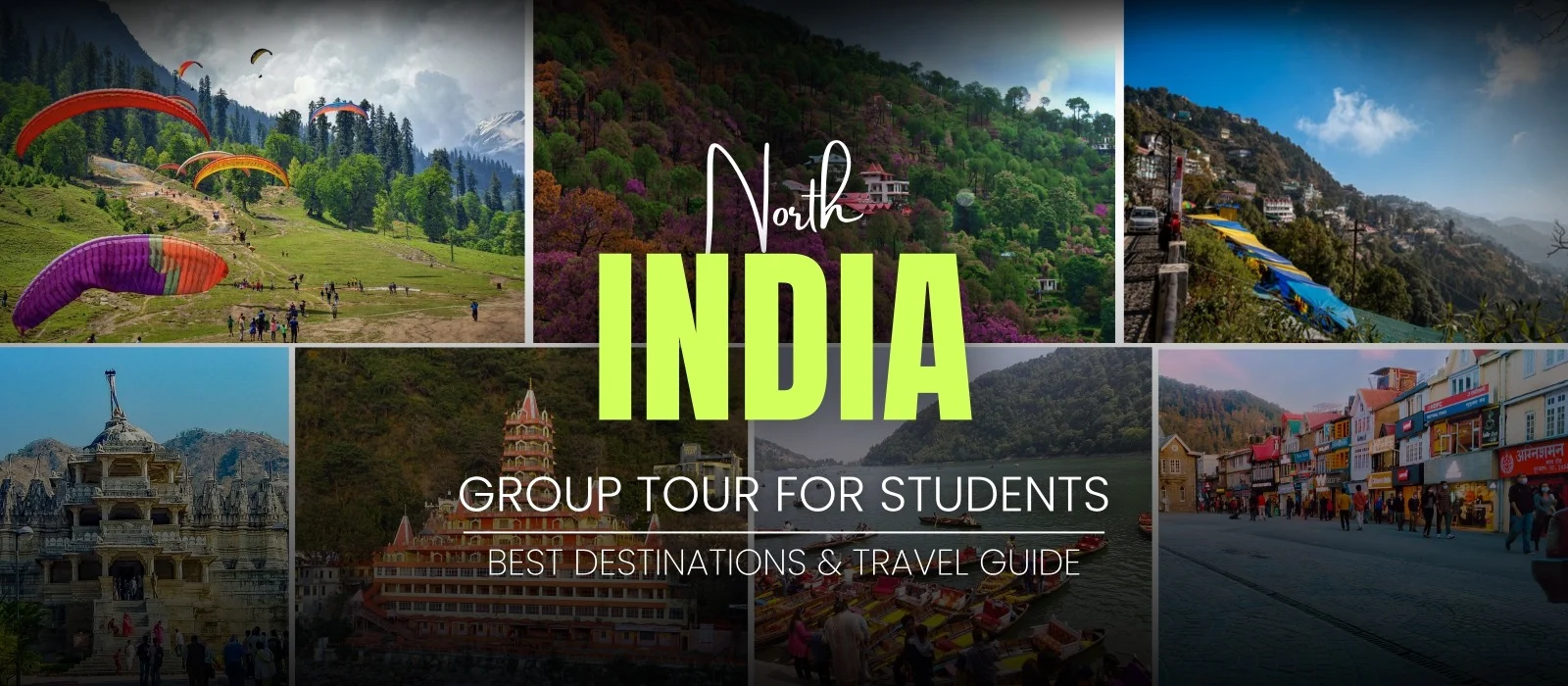
Introduction: North India Group Tour for Students
Quick Summary
| ✓ North India is ideal for student group tours with diverse destinations in close proximity | ✓ Cultural cities like Amritsar and Haridwar connect students to history and traditions |
| ✓ Hill stations like Shimla and Manali offer geography and climate learning | ✓ Strong infrastructure and budget-friendly planning make it perfect for schools and colleges |
| ✓ Wildlife parks like Jim Corbett and Ranthambore provide real-world ecology exposure |
North India has some of the most varied geography and history in the country. Mountains, deserts, rivers, temples, forts, wildlife reserves — all of it sits within a few hundred kilometres of each other. For a student group, this variety is exactly what makes a North India group tour for students worth planning.
This isn't just sightseeing. A well-planned North India student tour connects what students read in textbooks with what they actually see on the ground. History feels different when you are standing inside a 400-year-old fort. Ecology makes more sense when you watch a tiger move through dry forest. Geography clicks when your bus climbs from plains to Himalayan foothills in a single day.
This guide covers the best destinations, realistic itineraries, budget breakdowns, safety advice and practical tips for schools and colleges planning group travel to North India. Whether you are a teacher, a trip coordinator or a student helping organise the trip — you will find what you need here.
Why Choose North India for Student Tours?
North India works well for student groups for reasons that go beyond scenery.
Curriculum relevance is high. The region covers topics from history, political science, geography, environmental science and religious studies. Agra connects to Mughal history. Haridwar and Rishikesh connect to Indian culture and river geography. Jim Corbett and Ranthambore connect to wildlife conservation. This makes the trip academically defensible to parents and school boards.
Destinations are close together. Unlike South India or Northeast India, many of North India's top student destinations cluster within drivable distance. Shimla, Manali, Kasauli and Dharamshala all sit in Himachal Pradesh. Haridwar, Rishikesh, Mussoorie, Nainital and Ranikhet are all within Uttarakhand. A single 6–8 day trip can cover 2–3 destinations without burning too much time on travel.
Infrastructure is well-developed. North India's tourist routes — especially hill stations and heritage cities — have good road connectivity, a wide range of budget accommodation options and plenty of experience handling student groups.
| ✓ It suits different group sizes — whether 30-student school trip or 150-student college tour | ✓ Year-round options exist — hill stations in summer, plains in winter, wildlife parks in dry season |
Best Places to Visit in North India for Student Groups

Ranthambore – Wildlife Conservation in Action
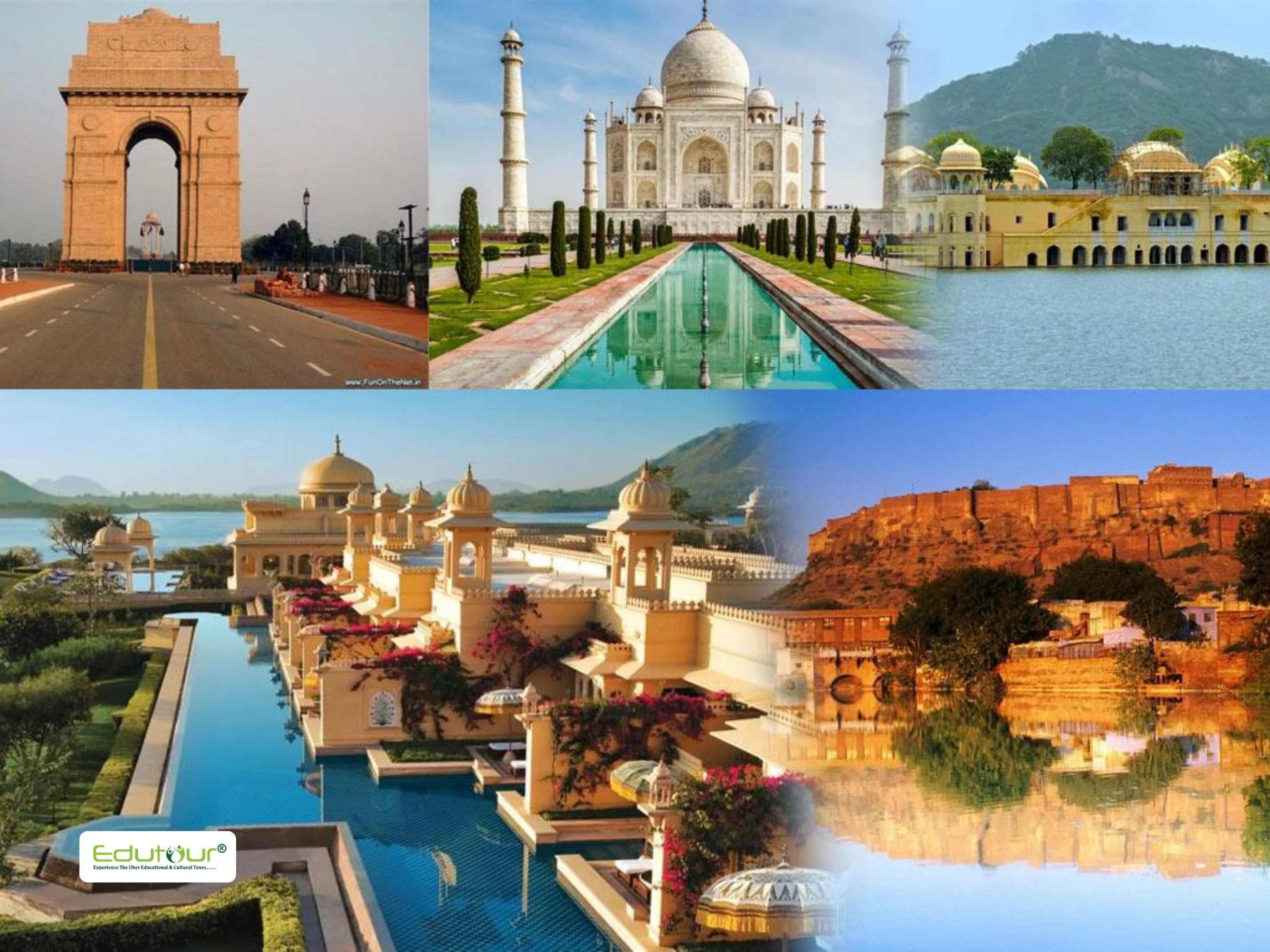
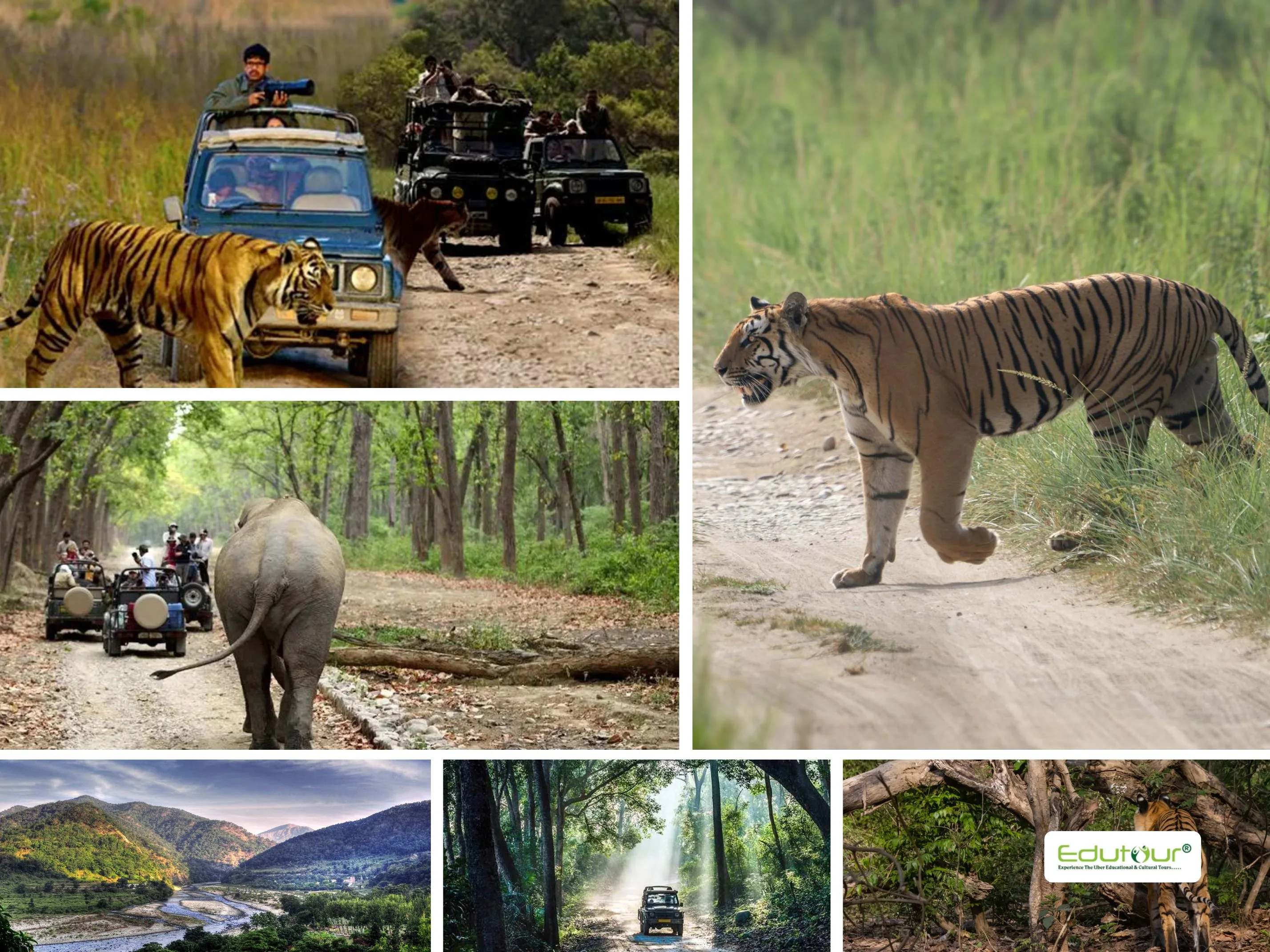
Ranthambore National Park in Rajasthan is one of the best places in India to see Bengal tigers in their natural habitat. For students, a Ranthambore tour for students is more than a safari ride — it is a field lesson in wildlife conservation, forest ecosystems and human-wildlife conflict.
The park sits on the edge of the Aravalli and Vindhya hill ranges. The dry deciduous forest, lakes and ancient ruins inside the park create an unusual landscape. Students can observe not just tigers but also leopards, sloth bears, crocodiles and hundreds of bird species.
| ✓ What students learn: Biodiversity, Project Tiger, conservation policy, forest ecology, food chains in dry tropical forests | ✓ Best for: Biology, environmental science, geography students. Works well for Class 8 and above |
| ✓ Group tip: Book safari slots early — Ranthambore has limited vehicles per zone per session. Morning safaris give better sighting chances |
Jim Corbett – India's Oldest National Park
Jim Corbett National Park in Uttarakhand is India's first national park, established in 1936. A Jim Corbett tour for students carries both ecological and historical value. The park is named after Jim Corbett, the hunter-turned-conservationist whose story connects to British India, wildlife protection and the evolution of conservation thinking.
The Ramganga river runs through the park. The terrain shifts from sal forest to grasslands to riverine areas. Elephant safaris and jeep safaris are both available, giving different perspectives on the landscape.
| ✓ What students learn: Conservation history, river ecosystems, endangered species protection, colonial-era India | ✓ Best for: History, geography, environmental science students |
Manali – Adventure and Himalayan Science
A Manali tour for students is one of the most popular choices for college groups. Situated at 2,050 metres in the Kullu Valley, Manali sits on the edge of the Great Himalayan range. The Beas River runs alongside the town.
Students can visit the Solang Valley, Rohtang Pass (if accessible), the Hadimba Devi Temple and the Tibetan Monastery. Adventure activities like river rafting and trekking are available, but these need proper supervision and safety arrangements.
| ✓ What students learn: Himalayan geology, river formation, Tibetan Buddhist culture, high-altitude ecology | ✓ Best for: Geography, culture studies, adventure education groups. Suitable for Class 9 and above |
Shimla – Colonial Architecture and Mountain Climate
Shimla educational tours work particularly well for history and architecture students. Shimla was the summer capital of British India and this history shows in its buildings — the Viceregal Lodge (now the Indian Institute of Advanced Study), Christ Church and the old Mall Road all carry visible colonial architecture.
The town sits at 2,205 metres. The ridge offers views of the surrounding ranges. The toy train ride from Kalka to Shimla (UNESCO World Heritage route) is an experience students rarely forget.
| ✓ What students learn: Colonial history, mountain architecture, railway engineering, climate geography |
Mussoorie – The Queen of Hill Stations
Mussoorie educational tours are well-suited for school groups from Class 6 onwards. The town sits at 2,000 metres in the Garhwal Himalayas. Kempty Falls, Gun Hill, Lal Tibba and the Landour area are the main points of interest.
Mussoorie is close to Dehradun, which adds value — the Forest Research Institute (FRI) in Dehradun is one of India's oldest forestry institutions and has a fine museum covering Indian timber, forest products and conservation. Combining Mussoorie with an FRI visit makes for a strong educational package.

Nainital – Lake Geography and Hill Ecology
A Nainital tour for students introduces lake geography in a very direct way. The town is built around Naini Lake, a naturally formed tectonic lake. The surrounding hills offer clear views of how hill towns develop around natural water bodies.
The Nainital Zoo houses Himalayan species — snow leopards, Himalayan black bears, Tibetan wolves — which connects well to conservation education. The cable car to Snow View Point shows students the landscape from above.
Nearby add-on: Ranikhet, about 50 km from Nainital, is a quiet cantonment town. A Ranikhet tour for students works well as an add-on for groups that want to understand military cantonment history and Kumaoni culture without the crowds.
Kasauli – A Quiet Heritage Town
Kasauli educational tours are less common but very worthwhile. The town is one of the smallest cantonment areas in Himachal Pradesh. It has colonial-era buildings, a Pasteur Institute (one of India's oldest health research institutions) and forest trails.
For students interested in public health history, the Pasteur Institute connection to rabies vaccine production in India is genuinely interesting. Kasauli offers a slower pace than Shimla or Manali, which some student groups prefer.
Dharamshala – Tibetan Culture and Governance
A Dharamshala tour for students is different from most hill station visits. This town hosts the Tibetan government-in-exile. The Namgyal Monastery, the Tibet Museum and the Library of Tibetan Works and Archives give students direct exposure to Tibetan Buddhist culture, the political history of Tibet and refugee community organisation.
McLeod Ganj, the upper part of Dharamshala, is where most cultural institutions are located. The area is also close to trekking routes.
| ✓ What students learn: Tibetan Buddhism, refugee governance, political history, Himalayan culture |
Haridwar – River Geography and Hindu Pilgrimage Culture
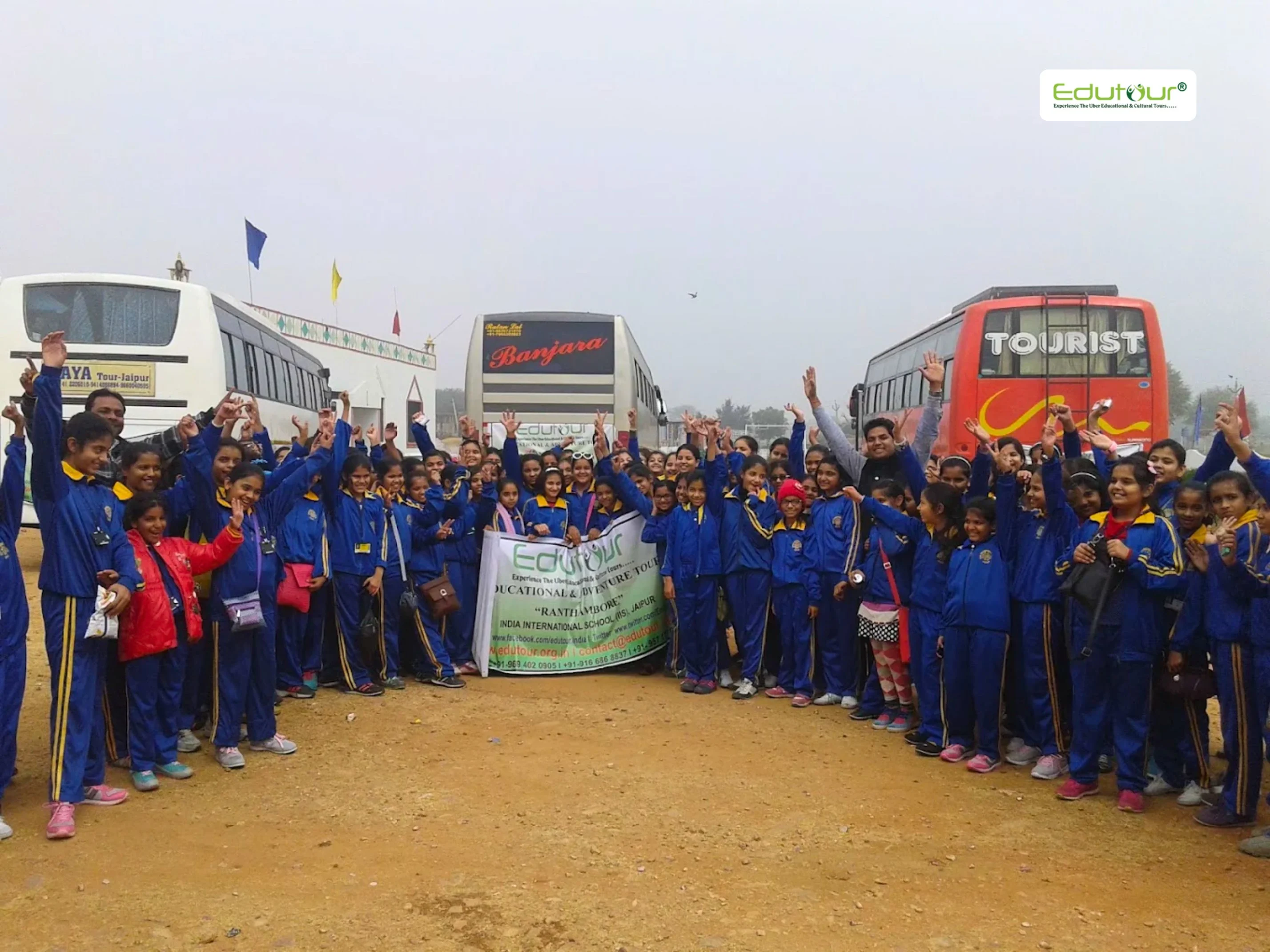
A Haridwar tour for students sits at the intersection of geography and culture. Haridwar is where the Ganga enters the plains after descending from the Himalayas. The Har ki Pauri ghat is the main religious centre and the evening Ganga Aarti is one of the most attended religious ceremonies in India.
For students, Haridwar connects to river geography (the Ganga plain system), hydrology, pilgrimage culture and Hindu religious traditions. The city is also a gateway to the Rajaji National Park, which adds a wildlife dimension.
Best combined with: Rishikesh (30 km away).
Rishikesh – Yoga, Adventure and River Ecology
Rishikesh educational tours attract college groups in particular. The town sits where the Ganga comes out of the Himalayan foothills. The river is wide and clear here, running through a forested valley.
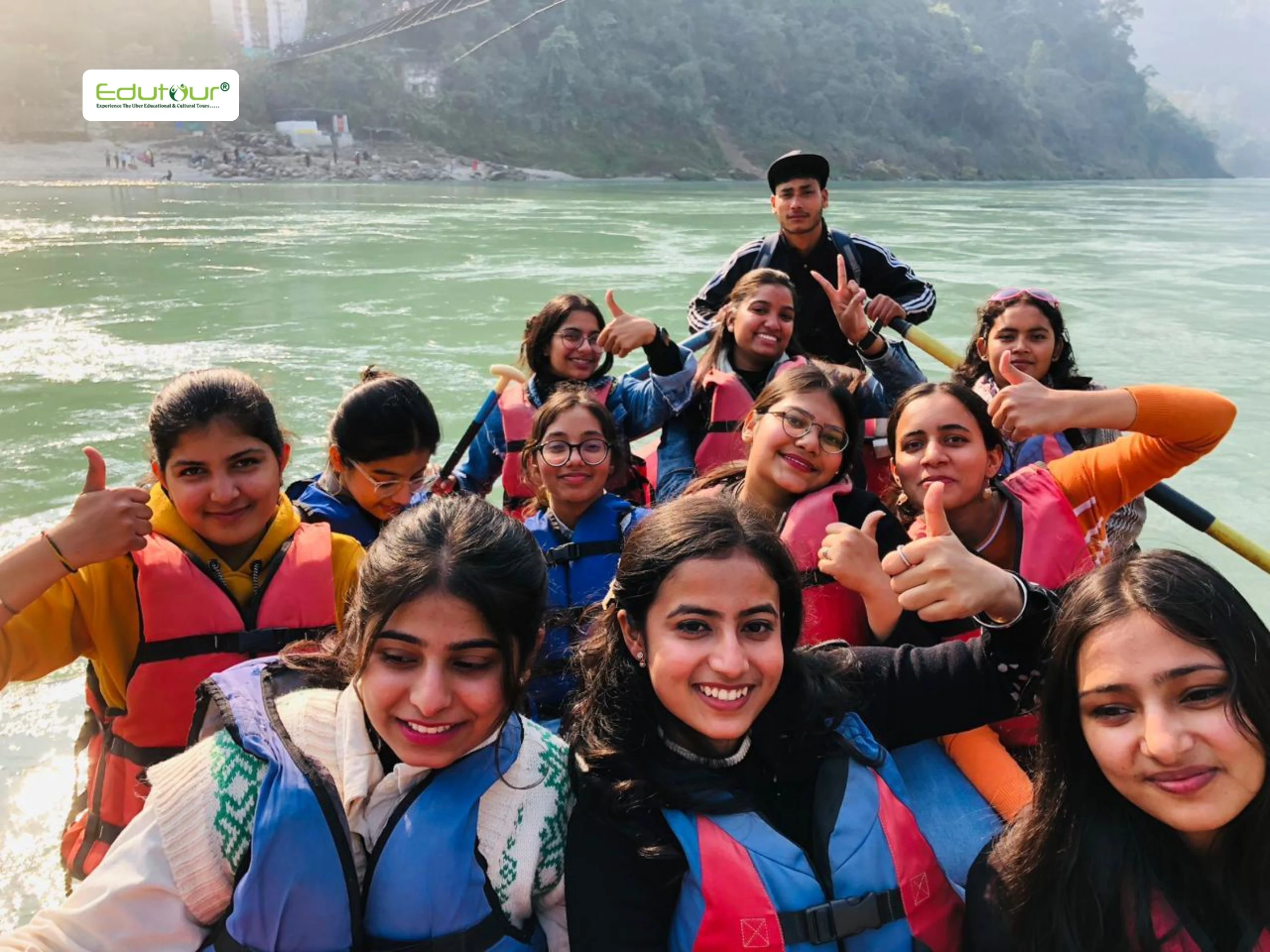
Students can observe river ecology, visit yoga and meditation centres, cross the Laxman Jhula suspension bridge and — for college-level groups with proper safety arrangements — try white-water rafting. The Ram Jhula and Triveni Ghat areas are relatively calm and suitable for school groups. The rafting zones further upstream are better for college groups with adventure clearances.
Amritsar – History, Resilience and National Identity
An Amritsar tour for students is one of the most emotionally and historically significant trips you can plan. The Golden Temple, Jallianwala Bagh, the Partition Museum and the Wagah Border ceremony are all within the same city.
This combination covers: Sikh religious tradition, colonial violence and the independence movement, partition history and current national identity. For history and social science students, it is hard to find a more concentrated set of learning experiences in a single city.
| ✓ What students learn: Sikh history, colonial India, the partition of 1947, border politics, religious architecture | ✓ Note: The Wagah Border ceremony happens every evening before sunset. Timing the trip to include it requires some itinerary planning but it is worth the effort |
Srinagar – Geography, Art and Culture
A Srinagar tour for students introduces the Kashmir Valley ecosystem — the Dal Lake system, the surrounding mountains, the saffron fields of Pampore and the Mughal gardens. The city itself has significant Mughal history (Shalimar Bagh, Nishat Bagh) and a distinct craft tradition (Pashmina weaving, paper-mâché, carpet making).
For college groups, Srinagar offers a chance to study mountain valley geography, climate and cultural heritage in one place.
Practical note: Student tours to Kashmir require coordination with school/college administration and should include proper documentation. The security situation has improved significantly and thousands of student groups visit annually.
Jammu – Gateway to the Himalayas
A Jammu tour for students is a practical option for groups that want Kashmir-region exposure without the longer travel time to Srinagar. The Vaishno Devi shrine trek (14 km round trip) is a combination of physical challenge and cultural education. The city also has the Bahu Fort, Dogra Art Museum and Amar Mahal Palace Museum.
Mount Abu – Rajasthan's Only Hill Station
A Mount Abu tour for students is the Rajasthan region's most interesting mix of geography and culture. Mount Abu sits at about 1,220 metres on the Aravalli range — the only hill station in an otherwise desert-and-plateau state.
The Dilwara Jain Temples are the major historical attraction. These 11th–13th century temples are among the finest examples of Jain marble architecture in India. The Nakki Lake, Wildlife Sanctuary and Guru Shikhar (highest peak of the Aravalli) are other points of interest.
✓ What students learn: Jain history and architecture, Aravalli geology, desert ecology and its contrast with the hill station microclimate

Top Destinations Comparison for Student Tours
| Destination | Best For | Grade Level | Trip Duration | Highlights |
|---|---|---|---|---|
| Ranthambore | Biology, Env. Science | Class 8+ | 2–3 days | Tiger safari, forest ecology |
| Jim Corbett | Geography, History | Class 8+ | 2–3 days | Wildlife, river ecosystem |
| Shimla | History, Architecture | Class 6+ | 2–3 days | Colonial history, toy train |
| Manali | Geography, Adventure | Class 9+ | 3–4 days | Himalayas, Rohtang, Beas River |
| Mussoorie | General education | Class 6+ | 2 days | FRI Dehradun combo |
| Nainital | Geography, Science | Class 6+ | 2–3 days | Lake geography, hill zoo |
| Amritsar | History, Social Science | Class 7+ | 2 days | Golden Temple, Jallianwala Bagh |
| Haridwar + Rishikesh | Geography, Culture | Class 7+ | 2 days | River geography, Ganga Aarti |
| Dharamshala | Culture, Political Studies | Class 9+ | 2–3 days | Tibet Museum, monastery |
| Srinagar | Geography, Culture | Class 10+ | 3–4 days | Dal Lake, Mughal gardens |
| Mount Abu | History, Geology | Class 7+ | 2 days | Dilwara temples, Aravalli |
Sample North India Group Tour Itinerary for Students
Here is a sample 7-day itinerary for a school group visiting Shimla, Manali and the surrounding areas. This is a reference structure — actual itineraries will vary based on group size, grade level and budget.
Day 1 – Departure
Overnight bus or train from your city to Chandigarh or Kalka.
Day 2 – Arrival at Shimla
Toy train from Kalka to Shimla (if budget allows). Check-in. Visit the Mall Road, Ridge and Christ Church. Evening orientation session.
Day 3 – Shimla Exploration
Morning: Viceregal Lodge (Indian Institute of Advanced Study). Afternoon: Jakhu Temple and forest trail. Evening: free time at the ridge.
Day 4 – Shimla to Manali
Morning departure. En route stop at Kullu Valley viewpoint and Beas River bank. Arrive Manali by evening. Check-in.
Day 5 – Manali
Morning: Hadimba Devi Temple, Manu Temple, Old Manali. Afternoon: Tibetan Monastery. Evening: group discussion and learning reflection.
Day 6 – Solang Valley / Rohtang (seasonal)
Full-day excursion to Solang Valley. Snow activities if season permits. River rafting (for college groups with clearance) on Beas.
Day 7 – Return
Early morning departure from Manali. Overnight journey back.
Budget North India Tour Package for Students
Budget planning for student tour packages India depends on group size, transport mode and accommodation standard. Here is a realistic cost breakdown for a 7-day North India trip.
| Cost Head | Budget Estimate (Per Student) |
|---|---|
| Transport (bus/train) | On Request |
| Accommodation (dormitory/budget hotel) | On Request |
| Meals (3 meals/day) | On Request |
| Entry fees & activities | On Request |
| Safari/excursions (wildlife parks) | On Request |
| Miscellaneous | On Request |
| Total (approx.) | On Request |
Cost-reducing options:
| ✓ Travel by government bus or train instead of private AC coach | ✓ Book early — Manali and Shimla accommodation prices rise sharply in peak season |
| ✓ Choose dormitory accommodation or government-run tourist rest houses | ✓ Group discounts on entry fees are available at most heritage sites and national parks |
What drives cost up:
| ✓ Private AC vehicles | ✓ Safari bookings in Jim Corbett or Ranthambore (fixed government rates but add to total) |
| ✓ Rohtang Pass permit and transport (mandatory for private vehicles, priced separately) |
School & College Tour Packages in North India
School group tours (Class 6–10) typically focus on safety, structured learning and moderate physical activity. Short itineraries of 4–5 days work better than longer ones. Recommended destinations: Shimla, Mussoorie, Nainital, Haridwar-Rishikesh, Amritsar.
Senior school tours (Class 11–12) can handle more intensive itineraries — Manali, Kasauli, Dharamshala, Ranthambore. Academic connections to board-level syllabus are easier to establish at this level.
College group tours have more flexibility. Srinagar, Jim Corbett, Manali adventure packages and multi-destination itineraries like Delhi–Agra–Jaipur combined with hill station visits are all workable.
When selecting school trip packages India or college tour packages India, check that the operator provides:
| ✓ Teacher-to-student ratios (minimum 1:15 recommended) | ✓ Registered vehicles with valid permits |
| ✓ Written emergency protocols | ✓ Medical support or tie-up with local hospitals |
| ✓ 24/7 contact number for coordinators |
Safety Tips for Student Group Travel
Before Departure
| ✓ Collect medical history forms from all students. Note allergies, chronic conditions and current medications | ✓ Brief students on the code of conduct, no-solo-movement rule and meeting points |
| ✓ Prepare an emergency contact list — both parents and local contacts at each destination | ✓ Check travel insurance coverage. Group travel insurance is available at low per-head costs |
During Travel
| ✓ Assign two teachers to every bus/vehicle. One at the front, one at the back | ✓ Set a strict curfew for hotel check-in and lights-out times |
| ✓ Use a headcount system at every stop. Count before and after every activity | ✓ Keep a first-aid kit accessible on the vehicle, not stored in luggage |
Destination-Specific
| ✓ At wildlife parks, students must stay inside the safari vehicle at all times. No exceptions | ✓ In markets and crowded areas, designate a fixed meeting point in case someone gets separated |
| ✓ At river ghats (Haridwar, Rishikesh), do not allow students near the water's edge after dark | ✓ In hill stations, watch for students prone to altitude sickness — headache and nausea in the first 24 hours is common but needs monitoring |
Communication
| ✓ Ensure all teachers have local SIM cards active before the trip begins | ✓ Share the hotel address and local emergency numbers (police, hospital) with every student and teacher |
Best Time to Visit North India for Student Tours
March to June (Summer)
Best for hill stations — Shimla, Manali, Nainital, Mussoorie, Kasauli, Dharamshala. Temperatures at altitude are comfortable (12°C–25°C) while the plains are hot. Schools typically plan trips in April–May before board exams or in the post-exam window. Manali in May–June is peak season. Rohtang Pass usually opens in May. Book accommodation at least 2 months in advance for this window.
October to February (Winter and Post-Monsoon)
Best for plains destinations — Amritsar, Ranthambore, Rajasthan region, Delhi heritage. Wildlife parks in Uttarakhand and Rajasthan have their best sighting conditions in November–March (dry season, sparse vegetation, animals near water). Mount Abu is pleasant year-round but coolest in December–January.
July to September (Monsoon)
Hill stations are lush but roads can be uncertain — landslides are common on Manali and Shimla routes. Not generally recommended for large student groups unless the itinerary avoids mountain roads. Haridwar and Rishikesh during monsoon have very high river levels. Water-based activities are suspended.
Common Mistakes to Avoid in Student Tours
| ✓ Overpacking the itinerary: Trying to cover 3–4 destinations in 4–5 days leads to exhaustion and poor learning outcomes | ✓ Ignoring altitude adjustment: Students may face mild altitude issues in places like Manali if not given rest on arrival |
| ✓ Ignoring travel time between destinations: Routes like Shimla to Manali take a full day — this is often underestimated | ✓ Lack of supervision planning: Not maintaining proper teacher-to-student ratios increases risk during travel and activities |
| ✓ Last-minute bookings: Safaris at Ranthambore and Jim Corbett get sold out weeks in advance | ✓ Allowing unsupervised movement: Most incidents happen when students wander off in markets or crowded areas |
Travel Tips for Students
| ✓ Pack light. For hill stations, layered clothing works better than heavy jackets. A light fleece, a wind-resistant outer layer and a waterproof jacket cover most North Indian hill conditions | ✓ Respect local customs. At religious sites (Golden Temple, Haridwar ghats, Tibetan monasteries), follow the dress code and behavioural expectations. Remove footwear where required. Keep voices low |
| ✓ Stay hydrated in altitude. Above 1,500 metres, the air is drier. Drink water regularly even if you don't feel thirsty | ✓ Carry some cash. Card acceptance in smaller hill towns and rural areas near wildlife parks can be unreliable. ATMs exist but may have queues or connectivity issues |
| ✓ Carry a small backpack for day trips. Do not carry your full luggage on excursions. Leave bags at the hotel and carry only essentials — water, snacks, a notebook, camera and ID | ✓ Document your observations. Bring a field notebook. Note what you see at each destination — animals spotted at Ranthambore, architectural features at Shimla's colonial buildings, the river level at Rishikesh |
| ✓ Do not stray from the group. This is the most broken rule on student trips and the cause of most incidents. Set a personal discipline around it regardless of what others do |
How Edutour Helps You Plan Better
Planning a student group tour involves logistics, safety and coordination. This is where EduTour adds value:
| ✓ Custom itinerary design: Trips are planned based on class level, learning goals and travel time realities | ✓ Safety-first approach: Verified hotels, trained drivers, teacher coordination and emergency protocols |
| ✓ End-to-end management: Transport, hotels, meals, permits and activities are handled in one place | ✓ On-ground support: 24/7 assistance during the trip to handle any unexpected situations |
| ✓ Bulk bookings expertise: Safari bookings at Ranthambore and Jim Corbett are managed for large groups | ✓ Cost optimization: Group pricing, early bookings and efficient routing help keep the tour within budget |
With the right planning partner, schools and colleges can focus on the learning experience while logistics are handled professionally.
Conclusion
North India offers more variety for student groups than most regions in the country. Wildlife parks, hill stations, river towns, cultural cities and mountain valleys all within manageable distances of each other.
A North India student tour package works best when the destinations are chosen to match the curriculum, the itinerary is realistic (not over-packed), the budget is planned honestly and safety protocols are in writing before the bus leaves. The trip itself — the conversations on the road, the first tiger sighting, the sound of the Ganga Aarti, standing inside Jallianwala Bagh — takes care of the rest.
If you are planning a North India group tour for students and need help with itinerary design, bookings and on-ground coordination, EduTour specialises in exactly this — educational travel for schools and colleges, planned and managed from start to finish.
Let EduTour handle your student group tour — from transport, hotels, to safaris. Click here to request a free consultation now.
Frequently Asked Questions
Q1. What is the best time to plan a north india trip for students?
April–June is best for hill stations like Manali, Shimla and Nainital. October–February is best for wildlife parks (Ranthambore, Jim Corbett) and plains destinations like Amritsar. Avoid the monsoon months (July–September) for mountain routes.
Q2. How much does a north india tour package for students typically cost?
A 7-day group tour costs roughly ₹12,500–₹22,000 per student, depending on transport mode, accommodation type and destinations. Wildlife safaris and adventure activities add to this cost. Group size significantly affects the per-head price.
Q3. Is North India safe for school student trips?
Yes, with proper planning. Assign adequate teacher supervision, use registered vehicles, maintain a headcount system and carry group travel insurance. Thousands of school groups travel to North India each year without incident when basic safety protocols are followed.
Q4. Which north india destinations are best for Class 6–8 students?
Shimla, Nainital, Mussoorie and Haridwar-Rishikesh work well for this age group. These destinations have manageable terrain, clear educational value and lower physical demands than adventure-heavy destinations like Manali or Rohtang.
Q5. Can college groups include adventure activities in their north india itinerary?
Yes. River rafting on the Beas (Manali) or the Ganga (Rishikesh), trekking near Manali or Dharamshala and snow activities at Solang Valley are all available. Adventure activities require proper operator certification, safety equipment, student consent forms and teacher supervision.
Q6. What educational value does Amritsar offer for student groups?
Amritsar covers Sikh religious history (Golden Temple), colonial-era violence (Jallianwala Bagh), partition history (Partition Museum) and current national identity (Wagah Border ceremony). This range makes it one of the most academically rich day-itineraries in North India for history and social science students.
Q7. How do I book safaris for a large student group at Ranthambore or Jim Corbett?
Safari bookings at both parks go through the official forest department portals. For large groups, you will need multiple vehicle bookings across different zones. Book at least 60–90 days in advance for peak season (November–March). Tour operators with experience in educational tours can handle bulk bookings and zone allocation.
Q8. Are places to visit in north india for student groups accessible for all fitness levels?
Most hill stations and cultural destinations are accessible with moderate walking ability. Wildlife safaris involve sitting in vehicles. Adventure activities like trekking and rafting are optional and should be offered on a voluntary basis, not mandatory, within student groups. Always account for students with health conditions when planning physical activities.
